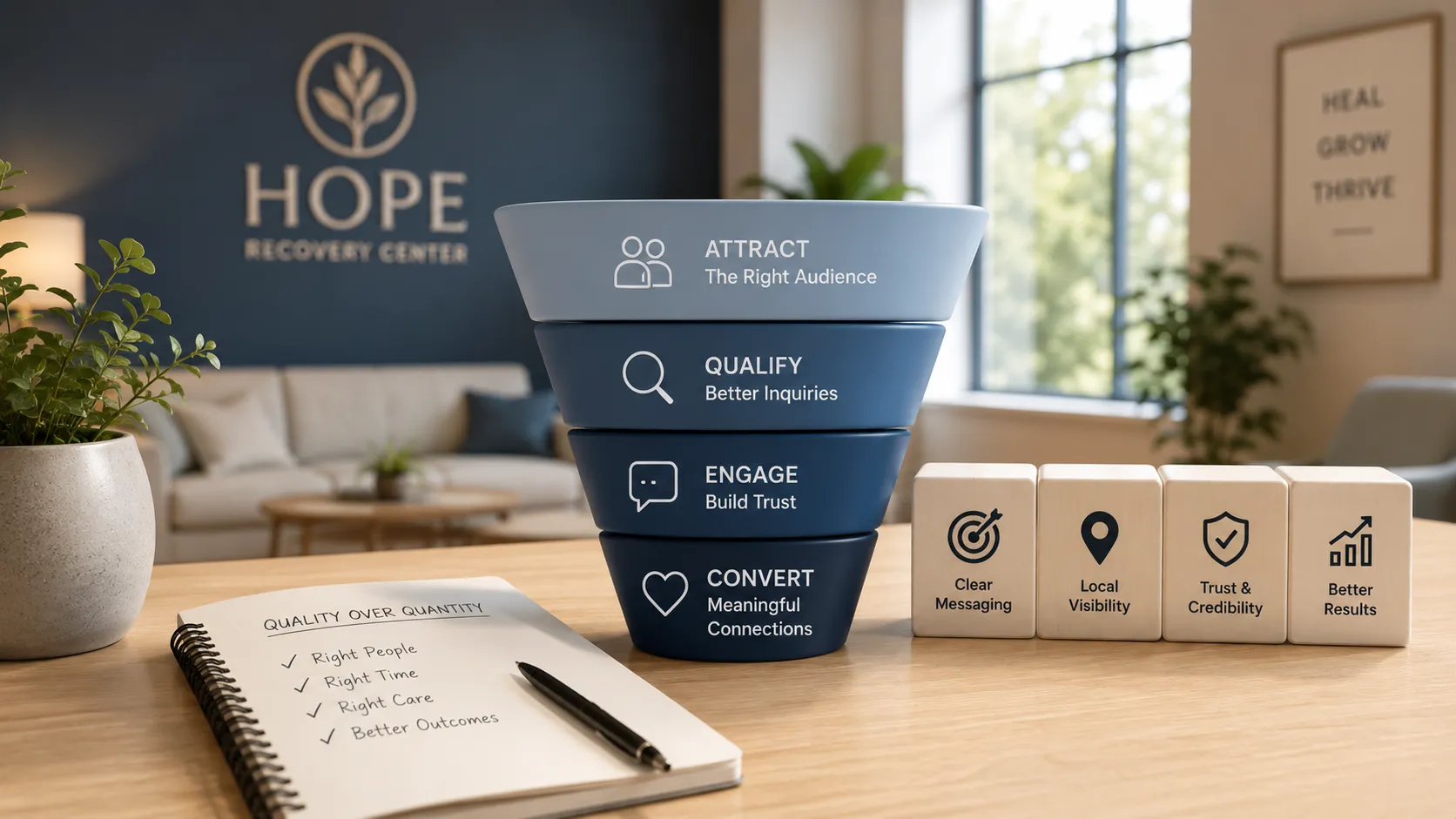
A rehab website has to do more than look professional. The people visiting it are rarely browsing casually. Many are anxious, overwhelmed, comparing programs, or trying to help a loved one who needs care. In those moments, the website's job is to build trust quickly, explain the treatment center clearly, and make it easy to call, submit a form, or request insurance verification.
Conversion is not about clever buttons or design tricks. It is about helping the right visitor feel confident enough to take the next step. The sections below cover what tends to make a rehab website convert more visitors into qualified inquiries, from the trust it establishes to the mobile experience and the conversion paths people actually use.
Why Rehab Website Conversions Depend on Trust First
Most visitors form an impression of a treatment center long before they speak with the admissions team. They judge the program by the quality, clarity, and credibility of the website in front of them. A site that feels organized and trustworthy makes the decision to reach out easier. A site that feels outdated, confusing, slow, or vague gives people a reason to hesitate.
That hesitation matters. Someone weighing whether to call may quietly close the tab if the website does not feel credible, even when the underlying program is excellent. A professional, well-structured website helps the center feel established and easier to understand, which is often the first step toward a qualified inquiry.
What Visitors Need to Understand Before They Reach Out
Before anyone calls or fills out a form, they are usually trying to answer a few practical questions. What services does this center offer? Who is the program for? What levels of care are available? Where is the center located? Might my insurance be accepted? And what actually happens after I reach out?
When those answers are easy to find, visitors are far less likely to leave with unanswered questions, and far more likely to take the next step. When the answers are buried, scattered, or missing, people fill the gaps with uncertainty, and uncertainty rarely leads to a call. The goal is to reduce confusion at every turn so that reaching out feels like the obvious, low-risk next step.
Visitors often need to understand
The Trust Signals That Make a Treatment Website Feel Credible
Trust is built from specific, verifiable details rather than adjectives. High-quality photos of the real facility and team help visitors picture where they would actually go. Clear information about admissions, accreditation or licensing where appropriate, and accepted insurance signals that the center is established and transparent. Testimonials, where they are allowed and handled in a compliant way, can add reassurance, as can helpful FAQs and a clean, professional design.
The most effective trust signals are honest, responsible, and easy to verify. Exaggerated claims, pressure-filled language, or anything that reads as overly sales-driven tends to do the opposite of what it intends. In a space as sensitive as addiction treatment, restraint and clarity usually build more confidence than bold promises.
Trust signals may include
How to Reduce Mobile Friction on Your Rehab Website
A large share of people searching for treatment do so on a phone, often in a stressful or emotional moment. That makes the mobile experience one of the most important factors in whether a visit becomes an inquiry. A mobile rehab website should load quickly, be easy to navigate, and make the most important actions simple to complete.
Small points of friction add up fast on mobile. Hard-to-read text, a phone number that is not immediately tappable, slow-loading pages, long forms, confusing menus, buttons that are difficult to tap, or an insurance verification path that is hard to find can all quietly cost a call.
Responsive design helps the site work consistently across phones, tablets, laptops, and desktops while keeping calls, forms, insurance verification, service information, and navigation within easy reach.
Compliance, Privacy, and Guidelines for Rehab Websites
Rehab websites operate in a sensitive and regulated space, which means conversion decisions cannot be separated from privacy and responsible communication. Treatment centers should be thoughtful about how forms are handled, how tracking scripts are used, how claims and testimonials are presented, and how sensitive treatment information is collected or shared.
Several areas commonly come up: HIPAA-sensitive inquiry paths, 42 CFR Part 2 considerations that apply to substance use disorder treatment providers, privacy policies and consent language, accessibility, and the advertising policies of the platforms a center relies on. These are not areas to treat casually. Treatment centers should review these areas with their legal, compliance, and operational teams to determine what is appropriate for their organization.
The broader principle is simple: conversion should never come at the expense of trust, privacy, or responsible communication. A website can be both effective and careful, and in this field it needs to be both.
What to Fix Before Driving More Traffic to the Website
It is tempting to focus on getting more visitors, but sending more traffic to a weak website mostly produces more missed opportunities. SEO and PPC can bring people to the site, yet if the page does not clearly explain services, load quickly, work well on mobile, or make the next step obvious, many of those hard-won visitors will leave without reaching out.
Before increasing traffic, it helps to review whether the website is ready to convert the visitors it already gets. Strengthening the items below tends to do more for qualified inquiries than simply adding more clicks on top of a site that is not yet ready for them.
Before sending more traffic, review
Improving these elements first means that every additional visitor from search or paid campaigns has a better chance of becoming a qualified inquiry rather than a lost opportunity.
Final Thoughts: Build the Website Around Your Ideal Patient
In the end, a rehab website works best when it is built around the person actually using it. That person may be looking for care, comparing treatment options, or trying to help someone they love through a frightening moment. When the site answers their real questions, earns their trust, and makes the next step clear, conversion tends to follow naturally.
Designing around that person, rather than around assumptions or trends, is what turns a professional-looking website into one that consistently turns visitors into calls, forms, and qualified inquiries.
Turn More Visitors Into Qualified Inquiries
If your treatment center wants to improve how the website turns visitors into calls, forms, and qualified inquiries, Elvero can help you evaluate where the biggest opportunities may be.