Outpatient-only treatment centers and inpatient or residential treatment centers can both rely on SEO, PPC, web design, and strong inquiry paths to grow. What works for one, though, does not automatically work for the other. The level of care a center provides shapes its economics, the way people search, the value of each inquiry, local positioning, referral strategy, website messaging, and how the admissions team follows up.
Neither model is automatically easier or harder to market. The right strategy is the one that matches the level of care, patient fit, market, and admissions goals. This article walks through the main differences and what they mean for a treatment center's marketing.
How the Economics Differ Between Outpatient and Inpatient Programs
Outpatient and inpatient models tend to have different underlying economics, and those differences influence marketing decisions. Inpatient and residential programs may differ from outpatient programs in revenue per admission, length of stay, staffing needs, facility costs, and capacity. Outpatient centers often rely more on consistent local inquiry volume, retention, step-down care, recurring attendance, and program fit over time.
These differences shape how aggressively a center can pursue each inquiry. An inpatient or residential center may be able to justify a higher acquisition cost in some cases, because a single admission can represent a larger episode of care. Outpatient centers often need to be more disciplined about local targeting, conversion rates, follow-up, and long-term patient engagement, since growth tends to come from a steady flow of well-fit local inquiries rather than a smaller number of high-value admissions.
The point is not to chase a specific number. It is to recognize that the marketing math behind each model is different, and to build a strategy that respects how your particular program actually generates and sustains census.
PPC and SEO Considerations for Each Treatment Model
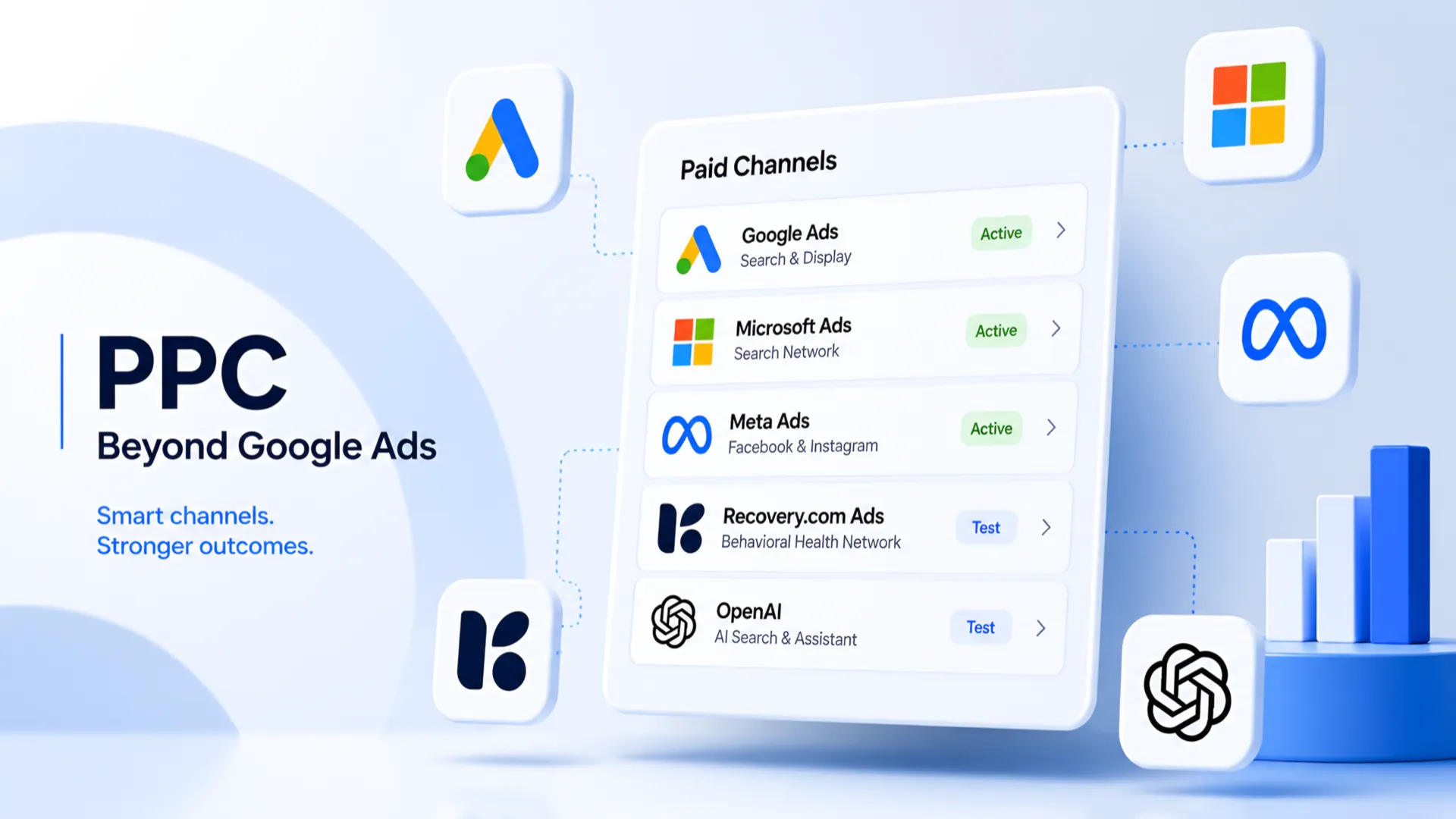
The core channels SEO, PPC, and web design look similar across models, but the strategy, messaging, targeting, and economics behind them should differ.
Outpatient centers
- Prioritize local SEO and Google Business Profile
- Build pages for PHP, IOP, outpatient, MAT, and nearby cities
- Use PPC for local high-intent searches
- Emphasize convenience, scheduling, and access
- Track calls, forms, and insurance verification by program
Inpatient or residential
- Build stronger program and facility pages
- Target broader treatment searches when appropriate
- Use PPC carefully, since cost per click can be competitive
- Highlight treatment setting, clinical support, and fit
- Support people comparing programs across markets
Search Intent Differences Between Outpatient and Inpatient Treatment
People search differently depending on the level of care they are looking for. Outpatient searches often carry a strong local and practical intent, while inpatient or residential searches may involve a broader geographic decision, higher-acuity needs, and more comparison between programs.
Outpatient search intent
Inpatient or residential intent
Reading intent this way helps a center prioritize the searches that match its model. Optimizing for terms that signal the wrong level of care can bring in traffic that rarely turns into a qualified inquiry.
Why Outpatient Centers Often Need Stronger Local Positioning
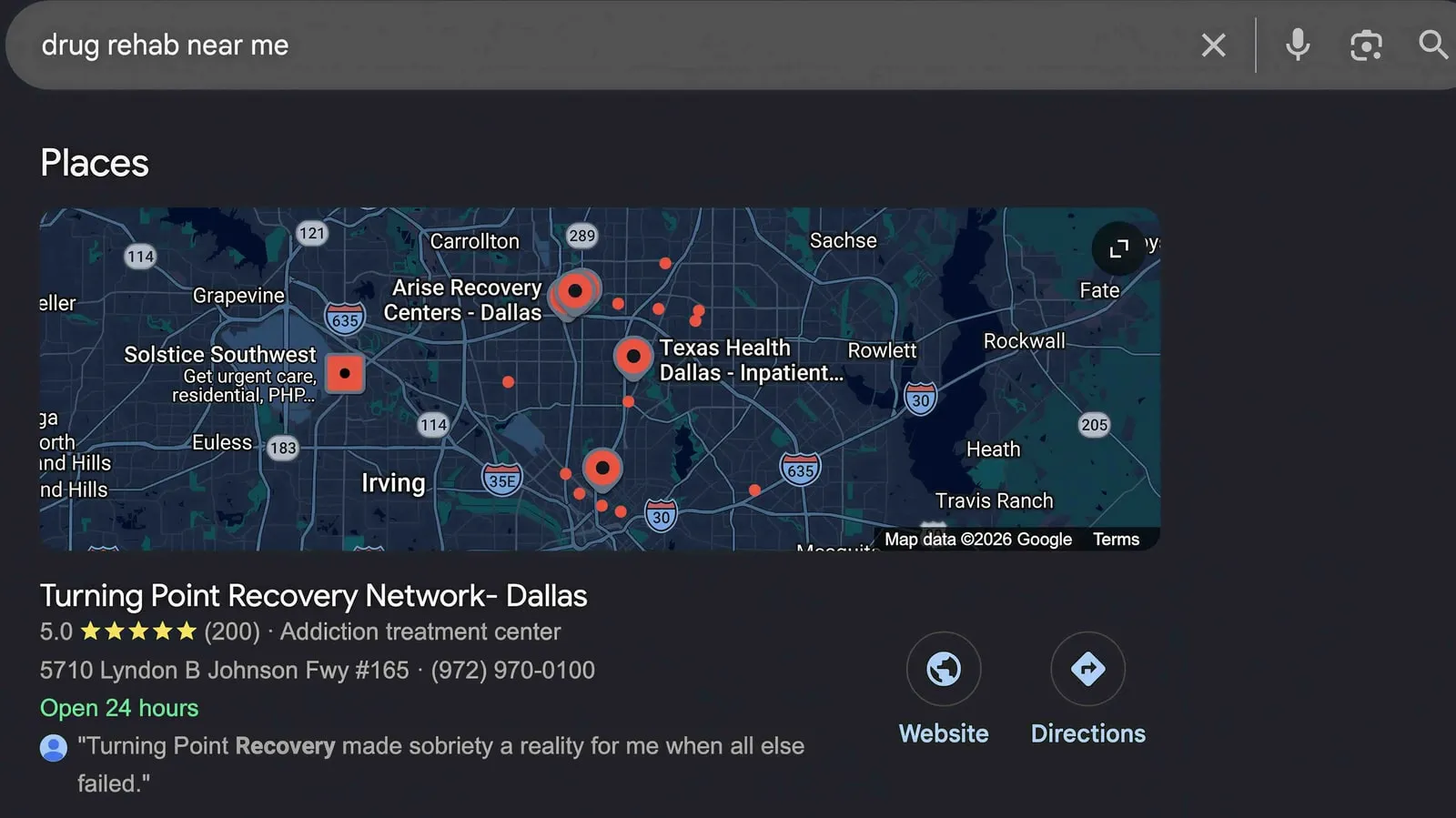
Outpatient care usually happens close to home. People want a program near their house, work, school, or family, because they will be traveling to it regularly while keeping up with daily life. That makes local visibility one of the most important parts of outpatient marketing.
Outpatient marketing should often emphasize location, accessibility, scheduling, levels of care, convenience, insurance options, and how the program fits into a person's day. Local SEO, Google Business Profile optimization, location pages, nearby-city targeting, and local trust signals can matter even more for outpatient centers than for programs that draw patients from a wider area.
How Referral Relationships Can Support Both Inpatient and Outpatient Growth
Outpatient and inpatient providers often serve people at different stages of the same journey, which creates room for ethical referral relationships. An outpatient center may refer someone to inpatient or residential care when that person needs a higher level of support than outpatient can safely provide. An inpatient or residential center may refer someone to PHP, IOP, outpatient, MAT, or continuing care after discharge.
When a center refers people to the appropriate level of care instead of trying to force every inquiry into its own program, it builds trust with other providers. Over time, that can create reciprocal referral opportunities, because other centers come to know that you send appropriate-fit inquiries their way and may return the favor when your level of care is the better match.
Referrals should always be based on genuine fit and the person's care needs, never on convenience or volume. Handled that way, a strong referral network can support growth for both outpatient and inpatient programs while keeping the patient's well-being at the center of every decision.
Match Your Marketing to Your Level of Care
If your treatment center is trying to understand how your level of care should shape your marketing strategy, Elvero can help you evaluate where SEO, PPC, web design, and referral positioning may have the greatest opportunity.